
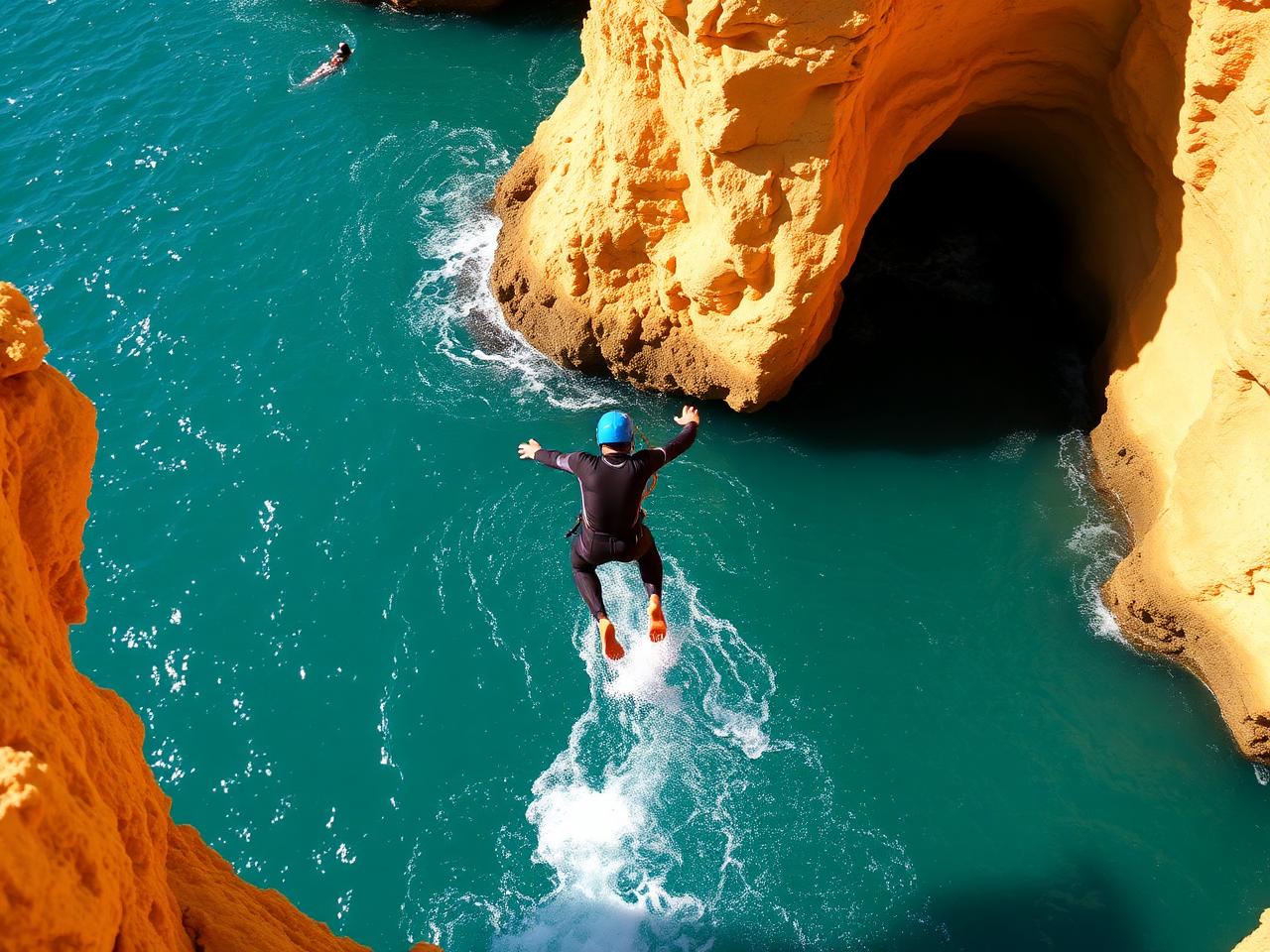
Is coasteering safe? Everything you need to know before you book
Coasteering looks wild — but how safe is it really? A complete safety guide written by certified guides in Lagos, Portugal.
Coasteering combines climbing along sea cliffs, swimming through rocky channels and jumping into the ocean from heights you choose. Done properly, with a certified guide and the right kit, it has a safety record comparable to swimming at a lifeguarded beach. Done badly — alone, without a wetsuit, jumping into water you haven't checked — it is one of the most dangerous things you can do on a coastline.
How we keep it safe: Every guest wears a 5/4 mm wetsuit (buoyancy + impact protection), a Coast Guard-approved life jacket, a climbing helmet and reef-safe water shoes. Maximum group size is 8 with two guides — one in front, one in back. We carry a marine radio, a first-aid kit and tow ropes on every session.
The jumps — and how we manage them: We start at 1.5 m so everyone can practise the technique (arms crossed, feet first, stay vertical). Higher jumps from 3 m, 5 m and up to 8 m are always optional. Nobody is ever pressured. Every jump platform is checked by the lead guide, the water depth is verified that morning, and the entry zone is cleared visually before each jump.
Conditions we won't run in: Swell over 1.5 m at the cliff base, onshore wind over 25 km/h, water temperature below 14 °C, or red-flag warnings from the Capitania do Porto. We cancel around 10–15 sessions a year and reschedule or refund — we never push it.
Who can do it: Strong swimmers (you must be able to swim 50 m comfortably in open water) aged 12+. We've taken people from 12 to 68. Pregnant guests, anyone with shoulder/back/heart conditions, and anyone who can't swim cannot participate — this is non-negotiable for your safety.
What can go wrong (honest answer): Minor scrapes from barnacles are the most common 'incident' — the wetsuit prevents most of them. Twisted ankles from the climb-out are the second. We've had two stitches required in 8 years of operation. There has never been a serious injury on our tours, and we are fully licensed and insured.
Red flags when choosing a coasteering operator: No certification listed, no insurance documents on request, group sizes above 10, no helmets provided, jumps without water depth checks, sessions running in heavy swell. If you see any of these, walk away.
How to prepare: Eat a proper breakfast (you'll burn 800–1000 calories), hydrate the day before, and bring a friend if it's your first time — it's more fun shared. Don't stay up late drinking the night before. The Atlantic is unforgiving of hangovers.
Perguntas frequentes
Is coasteering dangerous?
With a certified guide, the right kit and good conditions, coasteering is no more dangerous than swimming at a lifeguarded beach. Without those, it is genuinely high-risk.
Do you have to jump when coasteering?
No. Every jump is optional and you can opt out of any of them. Most tours include jumps from 1.5 m, 3 m and 5 m, with bigger ones available for the brave.
What's the minimum age for coasteering in the Algarve?
12 years old, provided the child is a confident swimmer. Younger kids should choose a family SUP tour instead.
Is coasteering safe for non-swimmers?
No — you must be able to swim at least 50 m in open water. The wetsuit and life jacket help, but you still need to be comfortable in the sea.