Surf, SUP, sea cliffs and the Cape St. Vincent lighthouse — everything you need to know about Sagres, the wild western tip of the Algarve.
Sagres is the wild, windswept end of mainland Europe — and the most underrated corner of the Algarve. Where Lagos is golden cliffs and sheltered coves, Sagres is full-force Atlantic: black cliffs, surf beaches, raw seafood and a fortress on a 60-metre headland built by Henry the Navigator in the 15th century. If you want the Algarve at its rawest, this is where to come.
How to get to Sagres: 35 km west of Lagos, 45 minutes by car on the N125 then the IC1. The Vamus bus from Lagos runs hourly in summer (€4, 1 hour). There is no train. Most visitors base in Lagos and day-trip; staying overnight in Sagres is for surfers and quiet-week travellers.
Top things to do in Sagres: 1) Walk the Sagres Fortress headland at sunset — €3 entry, 2 km loop, gunpowder views of the Atlantic. 2) Drive 6 km west to Cabo de São Vicente lighthouse — the southwesternmost point of mainland Europe, sunsets you'll remember forever. 3) Surf or take a lesson at Praia do Beliche, Praia do Tonel or Praia do Martinhal. 4) SUP and coasteering tours from the Sagres harbour on calm days. 5) Eat fresh fish at A Tasca or Mum's — the Sagres seafood scene punches above its weight.
The four Sagres beaches: Praia do Tonel — west-facing, surf-heavy, dramatic. Praia da Mareta — the town beach, sheltered, family-friendly. Praia do Martinhal — east-facing lagoon, perfect for windsurf beginners and small children. Praia do Beliche — between Sagres and Cabo de São Vicente, the most spectacular sunset.
Surfing in Sagres: this is one of Europe's most consistent surf zones. Beliche and Tonel face two different directions, so one of them is almost always working. Summer (June–September) brings small, beginner-friendly waves; winter (October–March) brings serious swell and pro-level conditions. Surf schools charge €40–€55 for a group lesson with board and wetsuit included.
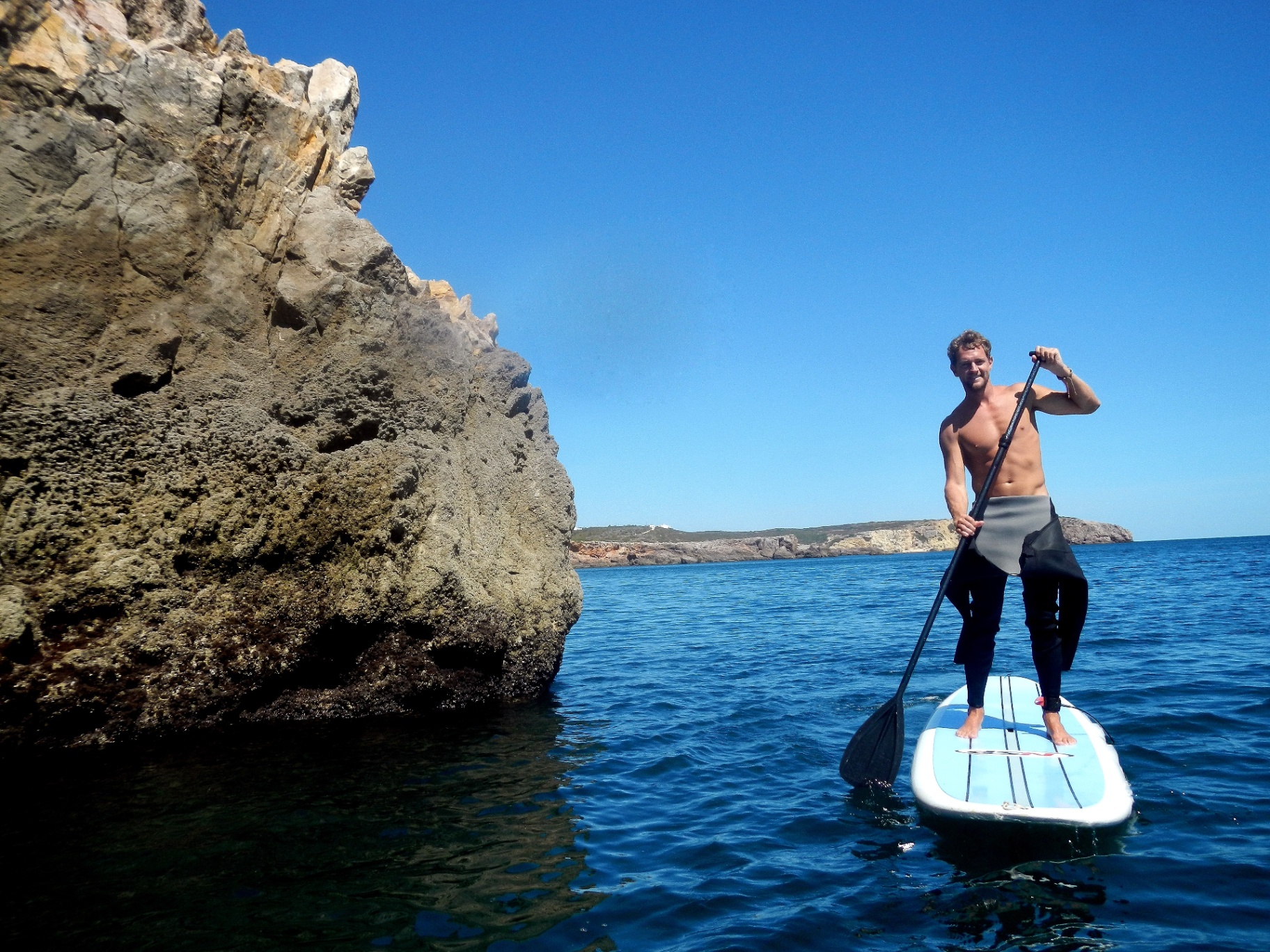
SUP and coasteering in Sagres: the Atlantic is more exposed here than in Lagos, so we run tours on calm-forecast days only. When conditions line up, the coastline between Sagres and Cabo de São Vicente is the wildest, emptiest SUP in the Algarve.
Where to stay: Memmo Baleeira (smart 4-star with sea views) or Pousada de Sagres (in the fortress complex) for upscale; Casa do Cabo de Santa Maria or the Sagres surf camps for budget and surf travellers. Most accommodation is a 10-minute walk from the harbour.
When to visit Sagres: April–June and September–October are the sweet spot — warm enough to swim, cool enough to walk the cliffs, far fewer crowds than Lagos. Summer is windy (the Nortada is strongest here) which is great for kitesurf and surf but tough for paddling.
Sagres vs Lagos — which to choose: Lagos for golden cliffs, sea caves, SUP, food and nightlife. Sagres for surf, end-of-Europe drama, raw Atlantic vibes and quieter beaches. Best plan: base in Lagos and day-trip to Sagres, or split the week.
Frequently asked questions
Is Sagres worth visiting in the Algarve?
Yes — Sagres is the wildest corner of the Algarve, with Cape St. Vincent, world-class surf, the historic fortress and the emptiest cliff hikes in the region. A day trip from Lagos is the easy way in.
What is Sagres, Portugal famous for?
The 15th-century fortress of Henry the Navigator, Cape St. Vincent lighthouse (the southwesternmost point of mainland Europe), consistent year-round surf and dramatic Atlantic sunsets.
How far is Sagres from Lagos?
35 km — about 45 minutes by car on the N125/IC1, or 1 hour on the Vamus bus (€4, hourly in summer).
Is Sagres good for beginners surfing?
Yes, in summer (June–September) the waves at Mareta, Martinhal and small-day Tonel are ideal for beginners. Lessons run from €40–€55 with all gear included.